

The Tennessee legislature has passed a bill requiring private health insurers to cover annual refills of contraception. The bill awaits Governor Lee’s signature.
Image Credit: Wikipedia Commons / CC & Antony-22 / CC
Submitted by Jennifer Hay [founder of Knoxville Nobility] –
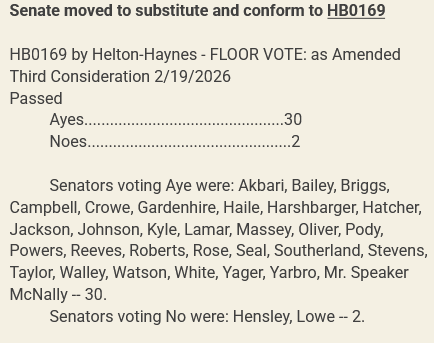
On February 19, the Tennessee Senate adopted and passed HB0169, prohibiting private health insurance companies from limiting contraceptive coverage to less than a one-year supply.
The bill previously passed the House on February 9. If signed by Governor Bill Lee, the law will take effect on July 1, 2027.
“Over 400,000 women in Tennessee currently live in what we call ‘contraceptive care deserts,’ so they have to travel a great deal to get their medication,” said Senator Raumesh Akbari (D), who sponsored the bill.
Akbari framed the measure as an extension of existing policy: “In 2024, this body passed legislation that allows TennCare beneficiaries to pick up an annual supply of birth control from their pharmacy. This bill will allow those who have private insurance to have the same benefit as those who are on TennCare.”

Tennessee Senators passed the bill by a vote of 30–2. Senators Adam Lowe (R) and Joey Hensley (R) voted against the bill; Senator Janice Bowling (R) abstained.
During debate, Hensley, a physician, asked what would happen if a patient received a one-year supply, used it for several months, and then lost the remaining pills. Akbari responded that the new law would not override insurers’ existing replacement policies.
State fiscal analyst Chris Higgins estimated that the new law could add up to $1.5M per year to the state budget.
For other medications, Tennessee law does not prescribe refill periods.

“I’m not aware of other medications that the TN General Assembly has passed [laws] regulating how health-plan benefits must cover dispensation,” said Lucas Hutchinson, assistant to Deputy House Speaker Jason Zachary.
According to the Cleveland Clinic, hormonal contraceptives prevent pregnancy by inhibiting ovulation or by thinning the uterine lining to impede the implantation of a fertilized egg.

About the Author: Jennifer Hay is the founder of Knoxville Nobility, a Substack publication for local pro-life, pro-family news and insights.