
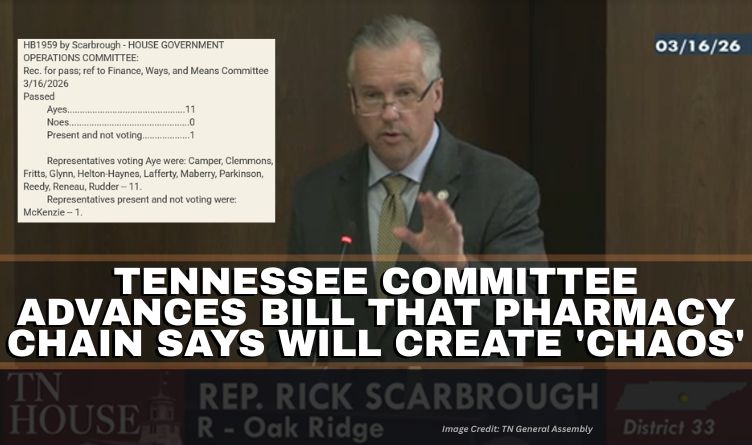
Image Credit: TN General Assembly
***Note from The Tennessee Conservative – this article posted here for informational purposes only.
The Center Square [By Kim Jarrett] –
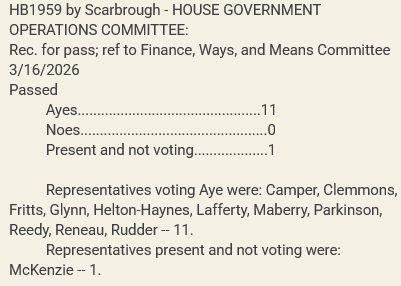
A bill that would require pharmacies to divest from pharmacy benefit managers was unanimously greenlighted by the Tennessee House Government Affairs Committee on Monday.
CVS Pharmacy says it would create “chaos” if passed.
Eleven Democrats and Republicans recommended approval of House Bill 1959, sending it to the Finance, Ways and Means Committee before it makes it to the House floor. The Senate Finance, Ways and Means Committee is scheduled to take up its version of the bill on Tuesday.
Rep. Rick Scarbrough, R-Oak Ridge, said the bill does one core thing.
“Beginning Jan. 1, 2028, the same corporate structure cannot control the pharmacy and control the pharmacy benefit manager,” Scarbrough said. “This bill does not regulate drug prices. It does not redesign insurance. It does not eliminate mail order.”

CVS Health, which owns pharmacy benefit manager CVS Caremark, and CVS Pharmacy, launched a media campaign opposing the bill, saying it would lead to the closure of 134 Tennessee stores. Caremark saved clients $45 billion in prescription drug costs, said a statement from CVS to The Center Square.
“PBMs work on behalf of employers and unions to lower the cost of the pharmacy benefit they can provide their employees and members,” the pharmacy said. “Decisions about what drugs are on a formulary, what a patient pays at the pharmacy counter, and which pharmacies are in-network are ultimately decisions that these employers and unions individually make based on their own budget and member population. A PBM provides options and lays out the costs/benefits of each option, and the employer or union decides which options work best for them.”
The Pharmaceutical Care Management Association which represented pharmacy benefit managers is also opposed to the bill, spokesman Greg Lopes said in a statement to The Center Square.
“This bill is very dangerous for patients’ health and will not lower drug costs for anyone,” Lopes said. “Research in fact shows it will significantly increase drug costs and increase hospitalizations. The bill does not improve access to prescription benefits, nor does it provide any safeguards for patients who would lose access to their drugs as a result of the legislation causing mass pharmacy closures. By shutting down pharmacies, the bill would create barriers to access, raise drug costs and make people sicker.”

The bill is supported by the Tennessee Pharmacists Association. Zac Hanson, of RX Preferred, a pharmacy benefit management company in Mt. Juliet, Tenn., said his company supports the bill.
“I think it offers a great level playing field and is a step forward in terms of building or rebuilding trust in our health care system,” Hanson told the Government Affairs Committee.
CVS said the bill does not address spread pricing or formularies.
“The only thing this legislation does is force the closure of 134 CVS pharmacies,” the company said. “It’s bad for Tennessee, for the more than 1.5 million patients we serve and for the more than 2,000 colleagues who will lose good paying jobs.”