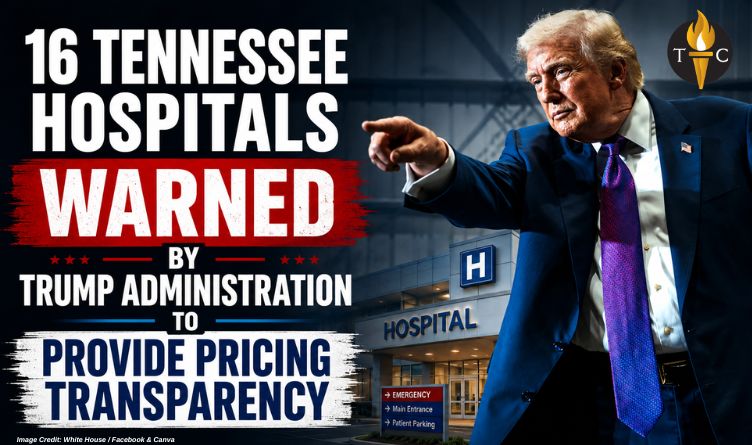
Image Credit: White House / Facebook & Canva
Tennessee Conservative News Staff –
More than 500 hospitals, including 16 in Tennessee, received a warning from the Trump administration for failure to provide basic pricing information to the public.
A list obtained by the Associated Press shows 519 hospitals have received warnings or have been asked to submit plans for providing transparent pricing since April. Failure to comply could result in fines of as much as $2 million each year for hospitals that do not come up with a pricing disclosure plan.
The Trump Administration has argued that without knowing the cost of medical procedures up front, patients, employers, or insurers may end up paying more than they should.
The following Tennessee hospitals have received a letter:
Warning Notices:
Ascension Saint Thomas Midtown Hospital – Nashville
Cookeville Regional Medical Center – Cookeville
Haywood Park Community Hospital – Brownsville
Lakeside Behavioral Health System – Memphis
Riverview Regional Medical Center – Carthage
Rolling Hills Hospital – Franklin
Sumner Regional Medical Center – Gallatin
Trousdale Medical Center – Hartsville
Corrective Action Plan (CAP):
Ascension Saint Thomas Three Rivers – Waverly
Bradley Medical Center Westside Campus – Cleveland
East Tennessee Children’s Hospital – Knoxville
Saint Thomas Hospital for Specialty Surgery – Nashville
Siskin Hospital for Physical Rehabilitation – Chattanooga
Sweetwater Hospital Association – Sweetwater
West Tennessee Healthcare Milan Hospital – Milan
Wiliamson Medical Center – Franklin
According to a senior advisor, President Trump plans to crack down on enforcement of pricing transparency in an effort to stop families from suffering caused by unexpected medical expenses.


One Response
GOOD!!