Image Credit: Canva.
***Note from The Tennessee Conservative – this article posted here for informational purposes only.
Article by Kim Jarrett, The Center Square –
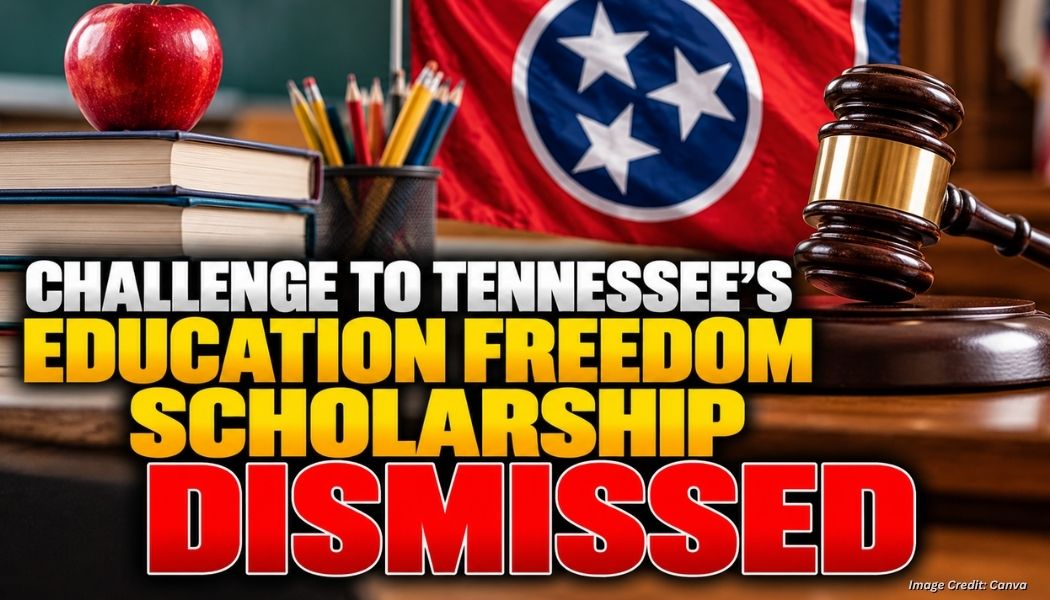
A three-judge panel dismissed a challenge to Tennessee’s school choice law, and also acknowledged issues with the state’s school funding formula.
Dustin Park of Blount County, parent of a child with Down syndrome, and four other parents challenged the constitutionality of the law in a case filed by the American Civil Liberties Union of Tennessee, the Education Law Center, the Southern Poverty Law Center, the Public Funds Public Schools campaign and the Southern Education Foundation.

The law was passed by the General Assembly in a January 2025 special session and signed by second-term Republican Gov. Bill Lee.
The panel said in its ruling that Tennessee Investment in Student Achievement funding formula has led to teacher shortages and supply shortages in the state’s schools.
The ruling said, “These funding and resource shortages have persisted for years and are acknowledged in state reports, and that TISA, though purportedly enacted to address inadequacies in the prior funding scheme, has failed to do so, particularly for students with higher needs, in part because the state conducted no assessment of the funding level required for a constitutionally adequate education before enacting TISA, and because TISA’s reliance on direct certification for identifying economically disadvantaged students likely undercounts such students given the administrative burdens of programs like SNAP, WIC, and TANF.”
SNAP, WIC, and TANF are federal and state assistance programs for low-income individuals and families. The acronyms represent the Supplemental Nutrition Assistance Program, the Special Supplemental Nutrition Program for Women, Infants, and Children, and the Temporary Assistance for Needy Families.

But issues with the funding formula predate the Education Freedom Scholarship program and are not because of the scholarships, the court said.
“The ESF Act and Program do not fund the allegedly inadequate public-school system, and plaintiffs make no allegation that they do,” the panel said in its ruling. “It follows therefrom that plaintiffs cannot state a claim against state defendants for their enforcement of the ESF Act and program as violative of any adequacy requirement of the education clause.”
The Center Square was unsuccessful prior to publication getting response from the Department of Education.

Denise Fair, of Jefferson City, and Mike and Monica Sweeney, of Knoxville, filed a motion in support of the school choice program. They were represented by EdChoice Legal Advocates and the Beacon Center of Tennessee.
“This is an important victory for Tennessee families, and especially for the parents who stood up to defend their children’s education,” said Melinda Hudson, attorney for EdChoice Legal Advocates, who argued the case. “For the Fair and Sweeney families, this was never just about a legal argument. It was about keeping their children in schools where they’re happy, learning and thriving.”
Applications for the $7,530 Education Freedom Scholarships increased significantly for the 2026-27 school year, the program’s second. More than 56,000 students applied for the 2026-27 school year, while more than 38,000 applied for the 2025-26 school year, according to the Tennessee Department of Education.
The Center Square was unsuccessful prior to publication getting response from the American Civil Liberties Union.