

Image Credit: Canva
The Tennessee Conservative [By Olivia Lupia] –
Several more pieces of immigration-related legislation are poised to become Tennessee law or have taken another step closer to final passage as both the House and Senate advanced bills on Tuesday pertaining to non-English speaking commercial drivers, immigration enforcement partnerships, and citizenship checks for professional licensure and public benefits.

HB1706– Prohibits illegal aliens from operating commercial vehicles in Tennessee
This bill explicitly prohibits those “not lawfully present” from driving commercial vehicles, creating a Class A misdemeanor for the illegal driver and a direct employer who knowingly allows an illegal alien to operate a commercial vehicle in the state.
If an illegal alien encounters law enforcement while driving a commercial vehicle, officers would be required to turn the individual over to immigration authorities. Additionally, the bill creates civil liabilities for accidents caused by illegal aliens, crafting accountability for employers who knowingly allow illegals on the road and employees of any state who knowingly issue commercial drivers’ licenses to illegal aliens.
The House floor vote was 73-20 along party lines in favor of passage.
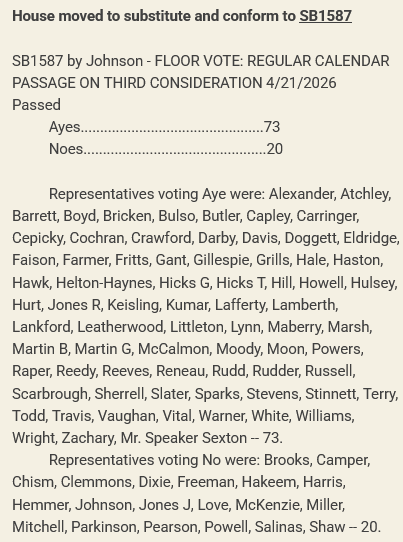
And as the House conformed to the already passed Senate version, which was also advanced along party lines, the bill can now head to Gov. Bill Lee’s desk for signature into law.
HB1710– Requires citizenship checks for state benefits
This bill would require all state and local governments and county health departments to verify the citizenship or legal residency in the U.S. of anyone who is 18 years or older applying for taxpayer-funded federal, state, or local public benefits.
If applicants do not present appropriate documentation to prove citizenship, they must be reported to the state’s Centralized Immigration Enforcement Division, and local agencies that fail to comply could be subject to investigation by the Attorney General and potentially funding cuts.
Additionally, public employees who do not comply with the requirements could be charged with a Class A misdemeanor.
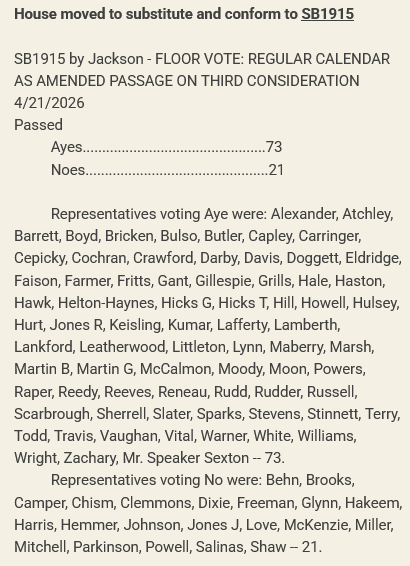
After adopting the Senate version, HB1710 was passed 73-21 along party lines, and as companion bill SB1915 passed last week, this bill will also officially become law after receiving the Governor’s signature.
HB1709– Prohibits illegal aliens from obtaining professional licenses
Under this proposal, those seeking to obtain professional licensure in the state would have to provide proof they are a United States citizen or a qualified alien. If unable to provide such proof, they would be required to show proof that they have applied for “a valid visa that would authorize such person to work in the United States under federal law.”
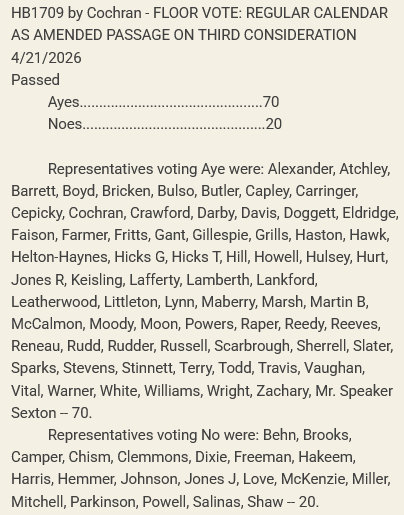
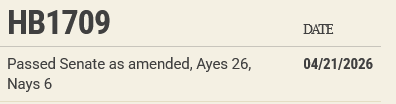
Voting 70-20 along party lines, the House passed the bill which was then picked up by the Senate later Tuesday afternoon. SB1901 passed 26-6 along party lines after the body conformed to HB1709, and as the language is the same in both bills, the legislation can now move to Gov. Lee for signature into law.
SB1889– Ensures those applying for a Tennessee driver’s license speak & read English
While the Tennessee Department of Safety currently offers license exams in several languages in addition to English including German, Japanese, Korean, and Spanish, this legislation would mandate that should applicants fail to meet “sufficient” English standards and take the test in an alternative language, they would be issued a three-year restricted license.
Upon its expiration, the applicant would have to retake the written exam in English without any assistance before being issued an unrestricted license. Additionally, applicants for vehicle registry would be required to provide evidence they are a U.S. citizen, lawful permanent resident, or have temporary lawful resident status.
During Tuesday’s meeting of the Senate Finance, Ways, and Means Committee, member Sen. Joey Hensley expressed support for this type of legislation, but lamented it was not more stringent.
“The whole purpose of this, I thought, was to make sure when people are on the roads driving, they can read and speak English. And this is still allowing them to drive for three years not being able to read road signs in English,” Hensley observed.
Bill sponsor Sen. Brent Taylor replied, “Senator [Hensley], if you and I were the only two voting that’s what we would have, but there were concerns with ECD [Economic & Community Development] with all of the recruitment we’re doing with foreign countries and the investment in Tennessee from foreign countries that this was the compromise we were able to work out that seemed to give everybody the least amount of heartburn.”
“Well, I will vote for this, but it’s certainly not the best thing we could do because the whole purpose in my mind is people driving being able to read road signs in English, and three years is, there’s still going to be a lot of people on the roads that can’t read the signs,” Hensley concluded.
Ultimately the committee still advanced the bill 9-2 along party lines, and SB1889 has been referred to the Senate Calendar Committee to secure a date for a floor vote.

Companion bill HB1708 passed the House during a contentious floor session on Monday, though it differs significantly from the Senate version as it prescribes an 18-month restricted license instead of a three year one, so there will likely be disagreement between the two chambers which will need to be resolved before the bill can ultimately become law.
SB2223– Mandates all Tennessee Sheriffs participate in federal 287(g) immigration enforcement
Sponsored by Sen. Jack Johnson, SB2223 stipulates that Sheriffs must participate in the 287(g) program under one of its three models and provides a statewide procedure for handling detainees awaiting transfer to federal custody.
Sheriff’s departments could choose between the 287(g) program’s Jail Enforcement Model, Warrant Service Officer Model, or Task Force Model which allows certified officers to identify and process removable aliens, place immigration detainers and initiate removal proceedings, and ensure transfer to ICE depending on which model the department enters.
Agencies that do not enter into the agreement could have state funds withheld. The bill would not apply to constables as they are separately authorized officers under Tennessee law, and participation by municipal police departments remains optional.
Passing the Senate Finance, Ways, and Means Committee 9-2 along party lines on Tuesday, the bill has also been referred to the Senate Calendar Committee to secure a date for a floor vote.

The House passed companion bill HB2219 during the heated Monday floor session and now waits on the Senate to vote before it can become state law.


About the Author: Olivia Lupia is a political refugee from Colorado who now calls Tennessee home. A proud follower of Christ, she views all political happenings through a Biblical lens and aims to utilize her knowledge and experience to educate and equip others. Olivia is an outspoken conservative who has run for local office, managed campaigns, and been highly involved with state & local GOPs, state legislatures, and other grassroots organizations and movements. Olivia can be reached at olivia@tennesseeconservativenews.com.

One Response
Good, thanx!