Image Credit: Canva
Tennessee Conservative News [By Olivia Lupia] –
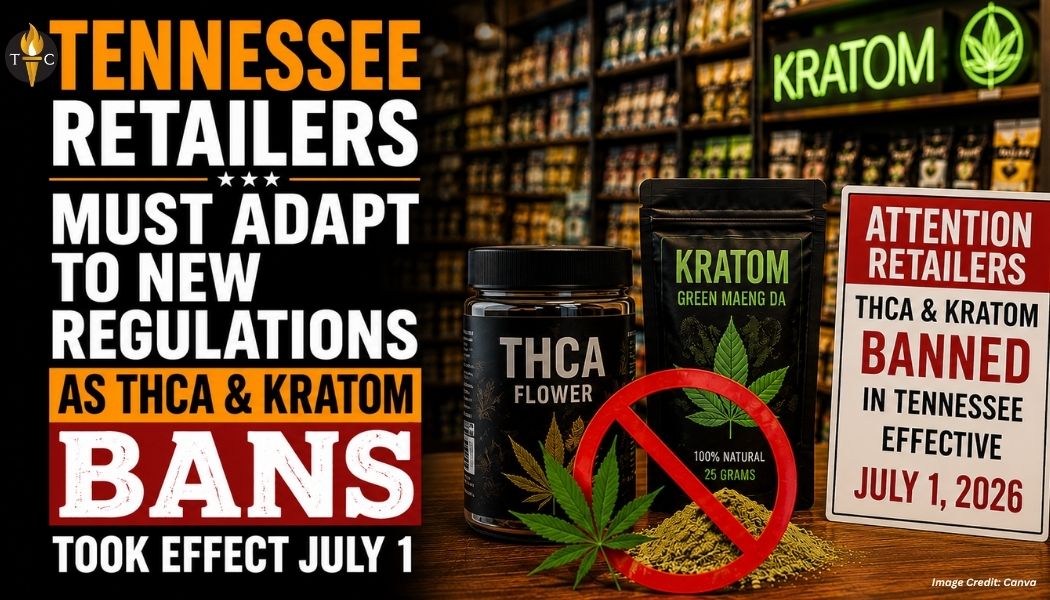
Tennessee’s new regulations on hemp and kratom officially took effect Wednesday, bringing significant changes to retailers across the state and highlighting a continued divide in mentalities about both substances by residents.
Under the new laws, including the enforcement of a THCA ban originally passed in 2025, oversight of hemp-derived cannabinoid products will move from the Tennessee Department of Agriculture to the Tennessee Alcoholic Beverage Commission (TABC). Businesses must now comply with new licensing requirements and product regulations or restrictions.
The 2025 legislation created the framework for the agency transfer and initially had the THCA restrictions set to take immediate effect, but a last-minute deal allowed companies to operate under the old regulatory framework and continue selling products like THCA until June 30 of this year.
THCA is a precursor acid found in raw cannabis plants that converts into intoxicating THC when heated, meaning products containing high levels of THCA can “deliver the same psychoactive effect as marijuana when smoked, even if they cleared a pre-harvest delta-9 test.”

Products most likely to be impacted are smokeable flower or vape products while other hemp-derived products like edibles and drinks will likely remain available, though capped at 15mg of THC per serving. The new law also prohibits THCP and other synthetic cannabinoids, eliminates online sales and home delivery, requires age verification for every transaction, and mandates certain testing to measure total THC inclusive of THCA conversion.
Several retail stores saw a rush on their businesses with the pending change, with customers trying to stock up on discounted products before the ban took effect.
“This week has been crazy,” said Whitney Huebner, an employee at Marley’s Smoke Shop in Nashville. “Real recently, like the past two weeks, it’s been very like adamant about people being like, ‘Oh, I need to get my medicine. I need to make sure that I have it before we run out, before we’re not allowed to get it anymore.’”
Perfect Plant founder and CEO Jackson Campbell, who opened one of Nashville’s “first true dispensaries” in 2018 said, “Our stores have been slammed. We [were] open until midnight [June 30], and there’s a lot of, you know, final fear purchasing.”
Campbell, who says the anticipation of the ban forced him to move his company headquarters and online retail operation out of state last year, was also a part of a lobbying group pushing back on the ban in the state legislature and intends to continue advocating for the hemp industry in Tennessee.
Critics of the ban like Campbell have said it will come with great cost to the state through the loss of “$50 million” in sales tax revenue and hinder employment opportunities, but supporters contend the changes close a loophole that allowed intoxicating products similar to marijuana to be sold while also improving product safety, reducing youth access, and making enforcement more consistent.

The other new law fully prohibiting the sale of kratom will make Tennessee the seventh state to have an outright ban on both the natural and synthetic forms of the substance which is known for its addictive stimulant and opioid effects and could often be found for sale in gas stations and smoke shops.
Though often packaged as a supplement, Republicans have called the drug “gas station heroin” and voted, with some bipartisan support, to enact the ban of all forms of kratom after a Chattanooga man died of an adverse reaction between the substance and his prescription medications.
Under the new law, all forms of kratom are scheduled as Schedule 1, the same category as LSD, marijuana, and ecstasy, and possession of any kind is a misdemeanor. Manufacturing, distribution, and sales, including knowingly selling to minors, are now felonies. Additionally, county medical examiners will be required to test for the presence of kratom during autopsies, and physicians will be required to test for the substance in cases where an infant is born with a suspected substance disorder.
Some overdose prevention advocates and addiction experts have expressed concerns that the state’s blanket prohibition on kratom could lead to an increase in both fatal and nonfatal overdoses as supplies disappear and users look to “more dangerous alternatives”, yet Knox County Forensic Center director and chief administrative officer Chris Thomas said last month that he had seen more fatal overdoses related to synthetic kratom so far this year than in all of 2025.
Lt. Mike Hotz of the Metro Nashville Police Department’s Overdose Unit agrees that kratom needs regulation but thinks a “blunt and broad” policy that isn’t accompanied by treatment will carry “unintended but foreseeable” consequences.
“This reminds me of when the federal government stepped in and told doctors they needed to stop overprescribing medication,” Hotz said. “They were too late to the ballgame, but when they did it, they actually did a great job. Doctors stopped overprescribing that stuff. But what the federal government didn’t do was realize or take action acknowledging that there was going to be a generation of addicted individuals who need treatment, otherwise they were going to turn to the street for the substance they were addicted to.”
He said he has been in contact with several partners like the Mental Health Cooperative and Samaritan Recovery Center about preparing for an increased need for addiction treatment.
And Joseph Petri, a Florida-based advocate who has worked in the substance abuse treatment field for over 20 years the unregulated synthetic products are the issue, not the entire spectrum of products under the kratom name. “We don’t have a kratom problem,” he said. “We have a quality assurance problem.” Petri also believes Tennessee’s complete prohibition will not eliminate demand and could make the supply “more dangerous”.
“You think it’s unregulated today, what happens when you’re completely in the dark?” he said.


Olivia Lupia is a political refugee from Colorado who now calls Tennessee home. A proud follower of Christ, she views all political happenings through a Biblical lens and aims to utilize her knowledge and experience to educate and equip others. Olivia is an outspoken conservative who has run for local office, managed campaigns, and been highly involved with state & local GOPs, state legislatures, and other grassroots organizations and movements. Olivia can be reached at olivia@tennesseeconservativenews.com.

One Response
“Christian” legislators are sold out to lucifer’s pharma and/or are fully propagandized.
Under the guise of “protecting the children” they’ve largely eliminated our non-opioid pain relief.