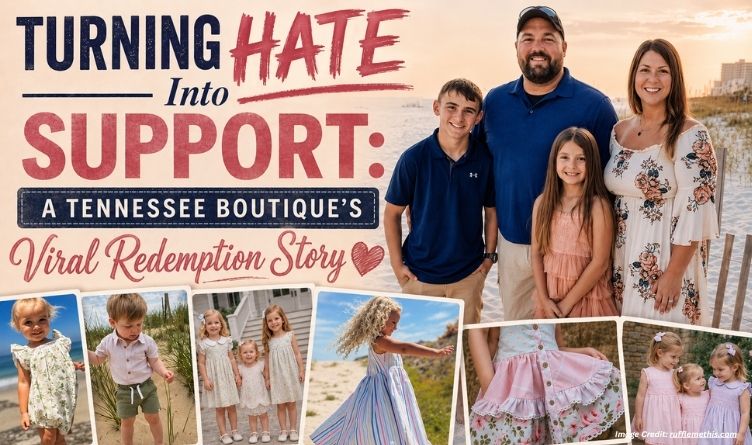
Image Credit: rufflemethis.com
Submitted by Connor B. –
In the early hours of a Monday morning, Amy What You Wanna Do, a conservative TikTok content creator, couldn’t sleep. Scrolling through the app around 2 a.m., she stumbled upon a video from Ruffle Me This, a small, faith-filled children’s boutique in Cookeville, Tennessee.
The shop’s owners had excitedly highlighted some of their handmade decor and clothing items that appeared in the background of a nursery photo posted by Karoline Leavitt, White House Press Secretary. What started as innocent product placement quickly turned ugly.
The comment section flooded with vitriol. Critics slammed the boutique for associating with a “politically divisive” figure, vowing never to shop there and accusing the owners of aligning with the wrong side. For a small, women-owned business hand-picking boys’ and girls’ pieces with custom in-house embroidery, the backlash felt personal and threatening.
Amy’s first reaction was simple: “That kind of sucks.” But something deeper stirred.
After watching a few more videos, she scrolled back, downloaded the boutique’s clip, and did something she had never done before—she sent a private message to the owner. “I am a conservative content creator on TikTok,” she wrote. “Would you be open to me doing a video highlighting your business?”

The owner, trusting the nudge, agreed. Amy created her own video recounting the story, urging her followers to rally behind the shop. The response was immediate and overwhelming. In just hours, Ruffle Me This’s follower count surged from 6,320 to over 12,300. Likes climbed from 37,000 to more than 43,600. Orders poured in from across the country—and even the world—as supporters turned outrage into action. The boutique’s website (rufflemethis.com) saw a flood of traffic, with many customers citing the story as their reason for shopping.
In her heartfelt video, Amy credits the turnaround to divine guidance. “I am a firm believer that when God nudges you to do something, you are obedient and He will bless you in ways you can’t even imagine,” she said. She described the moment as a clear prompting from the Lord, echoing Romans 8:28—the idea that God works all things for good. The owner felt the same peace.
What began as a late-night scroll became a powerful example of community support. Conservative voices online amplified the message, proving that kindness and loyalty can drown out negativity. Ruffle Me This, once targeted for simply celebrating a customer moment, emerged stronger—its faith-driven mission now more visible than ever.
Amy closed her video with gratitude: “Bless this business from the bottom of my heart. Thank you so much for obeying God and just blessing this family.”
In a divided digital world, one woman’s obedience and a community’s generosity transformed hate into hope for a small Tennessee family business. It’s a reminder that sometimes the best response to backlash is quiet, faithful action—and a whole lot of shopping.


2 Responses
Leave it to a brainless leftist to start a firestorm (which is backfiring PRAISE GOD) in their TDS. If I had children or grandbabies I would give this company significant business.
God Bless them for doing what is right and for Amy What You Wanna Do standing for them and sharing with the rest of us.
I prophesy success for Amy What You Wanna Do and rufflemethis.com. I further prophesy chaos and dismantling of the camps of the enemy.
Amen! Amen!
GOOD!!, thanx!