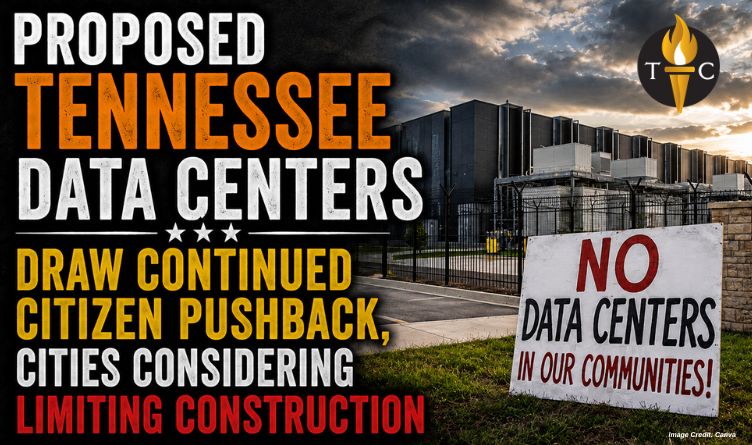
Image Credit: Canva
Tennessee Conservative News [By Olivia Lupia] –
A proposed data center next to the Nashville Zoo has sparked intense pushback from residents and officials alike, underscoring the Metro Council’s consideration of an ordinance to limit data centers and place them under stringent regulations. And other Tennessee cities are following suit, contemplating their own regulations or freezes as leaders work to protect residential neighborhoods from the massive facilities.
There are already approximately 27 data centers in the Nashville area, according to Data Center Map, but there have been little to no rules for how and where they can be build, and a new proposal for one by the zoo is adding momentum to the conversation about data center regulation, especially in the Davidson County area.
Georgia-based company DC Blox has reportedly filed permit applications with plans for a single-story, 69,220 square foot data center directly next to the zoo’s parking lot, requiring the demolition of two existing office buildings on the property. The site spans roughly 23.5 acres, and the planned building would ultimately cover an area slightly larger than a football field including the end zones.
DC Blox, which operates numerous data centers across Southeastern states including Georgia, Florida, South Carolina, Alabama, and Tennessee, has not publicly specified the facility’s anticipated energy usage, water demand, or overall investment.
The site is currently owned by MarketStreet Enterprises, per the permit filings, which has not yet officially sold the property. Metro Councilwoman Courtney Johnston confirmed the project remains in the early stages, with the grading permit application being prematurely submitted by the prospective purchaser. “That permit has not been approved,” she stated.
Johnston said proposals like these are exactly why the council is considering new rules for data centers and that she has “serious concerns about whether this type of development is appropriate next to the Nashville Zoo and nearby neighborhoods, and I support the pending ordinance to make sure these projects are reviewed based on their actual impacts.”
This proposed ordinance would ban large data centers from within a half mile of homes, schools, churches, and zoos, and would additionally require the centers to complete an approval process then follow rules on water usage, including the use of closed-loop cooling systems to recycle water, emissions, power generation, and noise.
The measure has over a dozen co-sponsors and supporters, both in government and community members, share many of the same concerns on issues like noise, energy demand, and the strain large facilities can put on utilities and infrastructure.
The Nashville Zoo also stands “vehemently opposed” to the data center’s proposal, with a spokesperson saying, “As a conservation and sustainability focused organization, we are working with community partners to learn what we can do to protect the Zoo’s property, animals, and our surrounding neighborhoods.”
Meanwhile, other Tennessee communities are working to establish their own proactive regulations, including the rural city of Cedar Hill. Mayor John Edwards has called for a two-year moratorium on construction of any data centers and cryptocurrency mines within city limits and introduced the resolution which was passed by the City Council at their Monday meeting.
Edwards confirmed that while there are not any current plans to build facilities in Cedar Hill, the intent of the moratorium is to keep it that way for at least the next two years as the city works through further regulations and waits to see how legal challenges to full bans other cities are imposing will go.
“We really wanted to see what those court rulings look like,” he said. “Is this a permanent ban we can put in place? And that’s something we really wanted to wait and see kind of how those court cases played out.”
The city of McMinnville is also considering a data center moratorium after a private developer announced plans for a 25-megawatt, 96,000 square foot facility to support an AI supercomputing platform. The city already has one data center, and residents and officials are worried the impact of the second, much larger center will have irreversible negative impacts on their community.
Over 2,600 residents have signed a petition calling for a “temporary 12-month moratorium on new AI and large-scale data center approvals,” and the mayor has called a special city meeting for Wednesday, June 3 to consider the proposal.
In May, Gov. Bill Lee signed legislation that requires data centers to pay for their own infrastructure or improvements and ensures customers do not see increased rates due to higher electricity demand caused by the facilities, but the law’s requirements only apply to facilities with a peak electric demand of at least 50 megawatts during the first three years of operation.
This means that centers like the one proposed in McMinnville, which is only slated for 25 megawatts, may not fall under the scope of the legislation and Tennessee ratepayers could end up being unprotected from rate hikes or other impacts from these centers if they are built just small enough to fall under the regulation.


About the Author: Olivia Lupia is a political refugee from Colorado who now calls Tennessee home. A proud follower of Christ, she views all political happenings through a Biblical lens and aims to utilize her knowledge and experience to educate and equip others. Olivia is an outspoken conservative who has run for local office, managed campaigns, and been highly involved with state & local GOPs, state legislatures, and other grassroots organizations and movements. Olivia can be reached at olivia@tennesseeconservativenews.com.

One Response
Good, thanx.